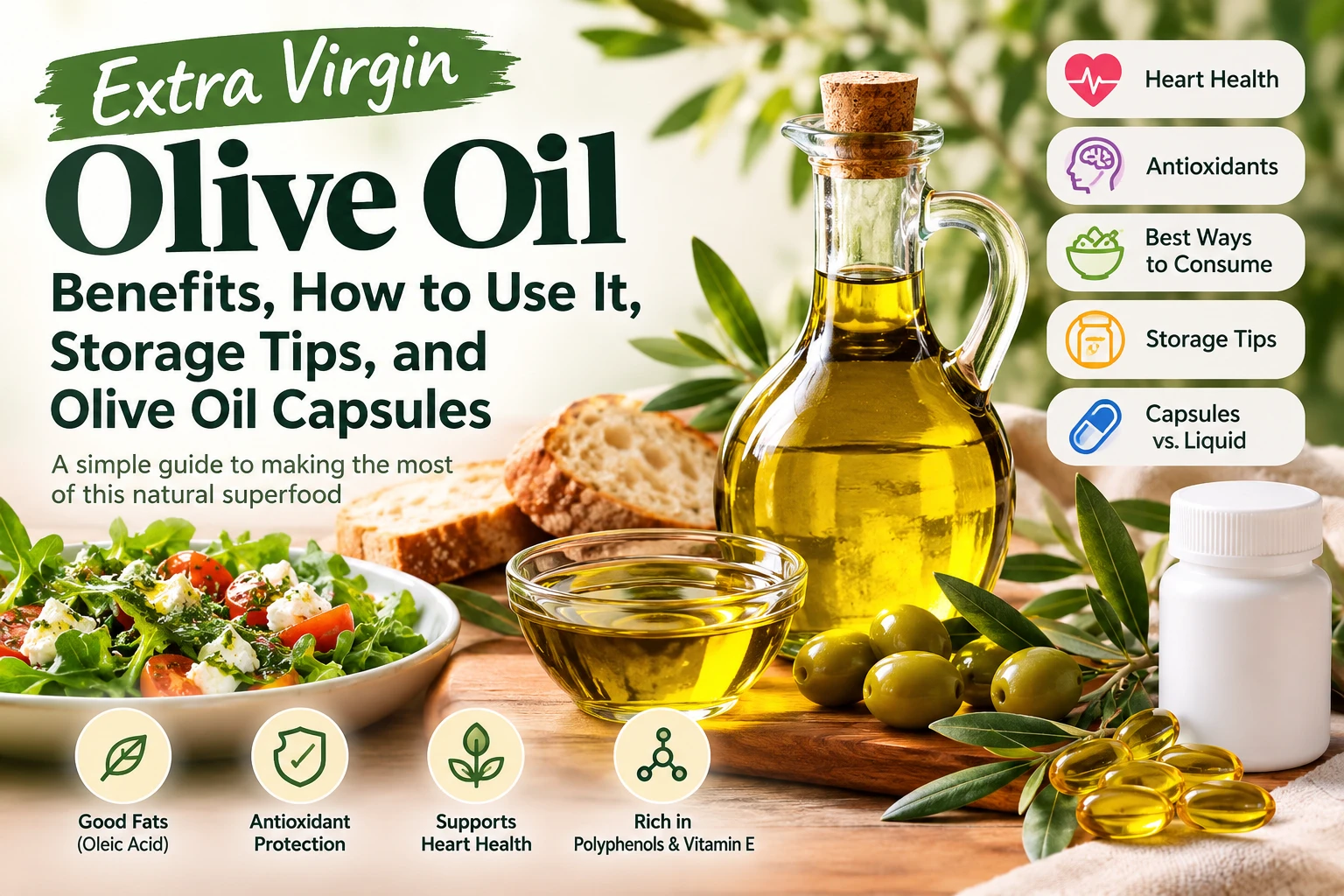
Extra virgin olive oil has become one of the most popular healthy cooking oils in the world. It is often associated with the Mediterranean diet, heart health, antioxidant protection, and healthy aging.
But there is a lot of confusion about the best way to consume it. Should you drink a spoonful of olive oil every morning? Is it better to mix it with lemon juice? Should you use it for cooking or consume it raw? What about olive oil capsules?
The answer is simpler than many people think. For most people, using high-quality extra virgin olive oil as part of a balanced diet is a practical way to enjoy its nutritional benefits. You do not necessarily need to drink it straight from a spoon to incorporate it into a healthy lifestyle.
- What makes extra virgin olive oil special
- Heart health and cardiovascular benefits
- Practical ways to use and consume it
- Calorie content and portion control
- Proper storage techniques
- Capsules vs. liquid olive oil
- How to choose high-quality oil
- Role in healthy aging
What Makes Extra Virgin Olive Oil Special?
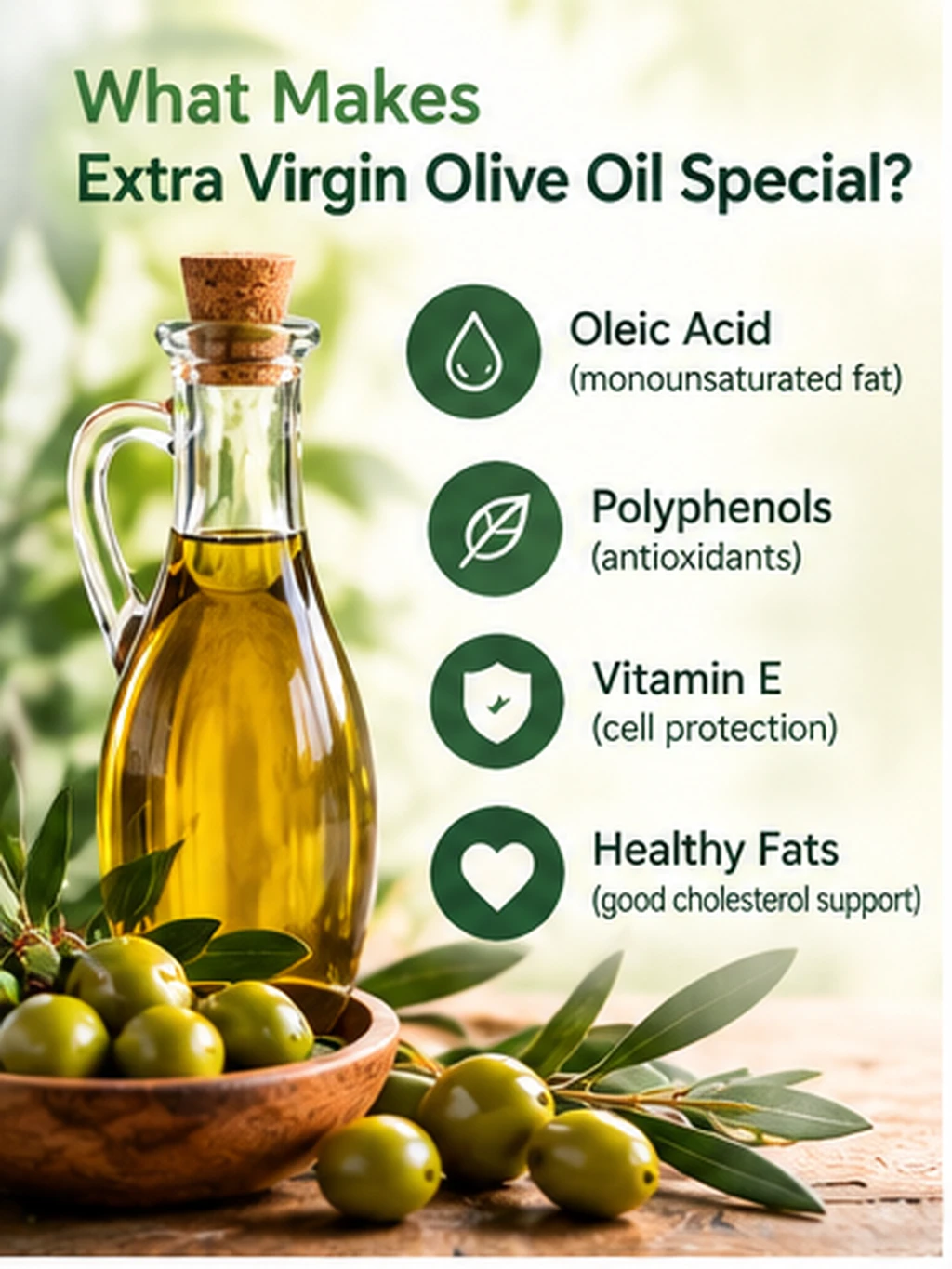
Olive oil is primarily made up of monounsaturated fat, particularly oleic acid. Oleic acid is one of the major reasons olive oil is considered a healthier fat choice compared with many sources of saturated fat.
Extra virgin olive oil also contains naturally occurring compounds such as:
- Polyphenols (antioxidants)
- Vitamin E (cell protection)
- Other antioxidant compounds
- Monounsaturated fatty acids (healthy fats)
These compounds contribute to the nutritional value of extra virgin olive oil. One important point is that not all olive oils are identical. Extra virgin olive oil is produced under standards that distinguish it from refined olive oils, and high-quality extra virgin olive oil can retain more of the naturally occurring compounds found in olives.
Extra Virgin Olive Oil and Heart Health
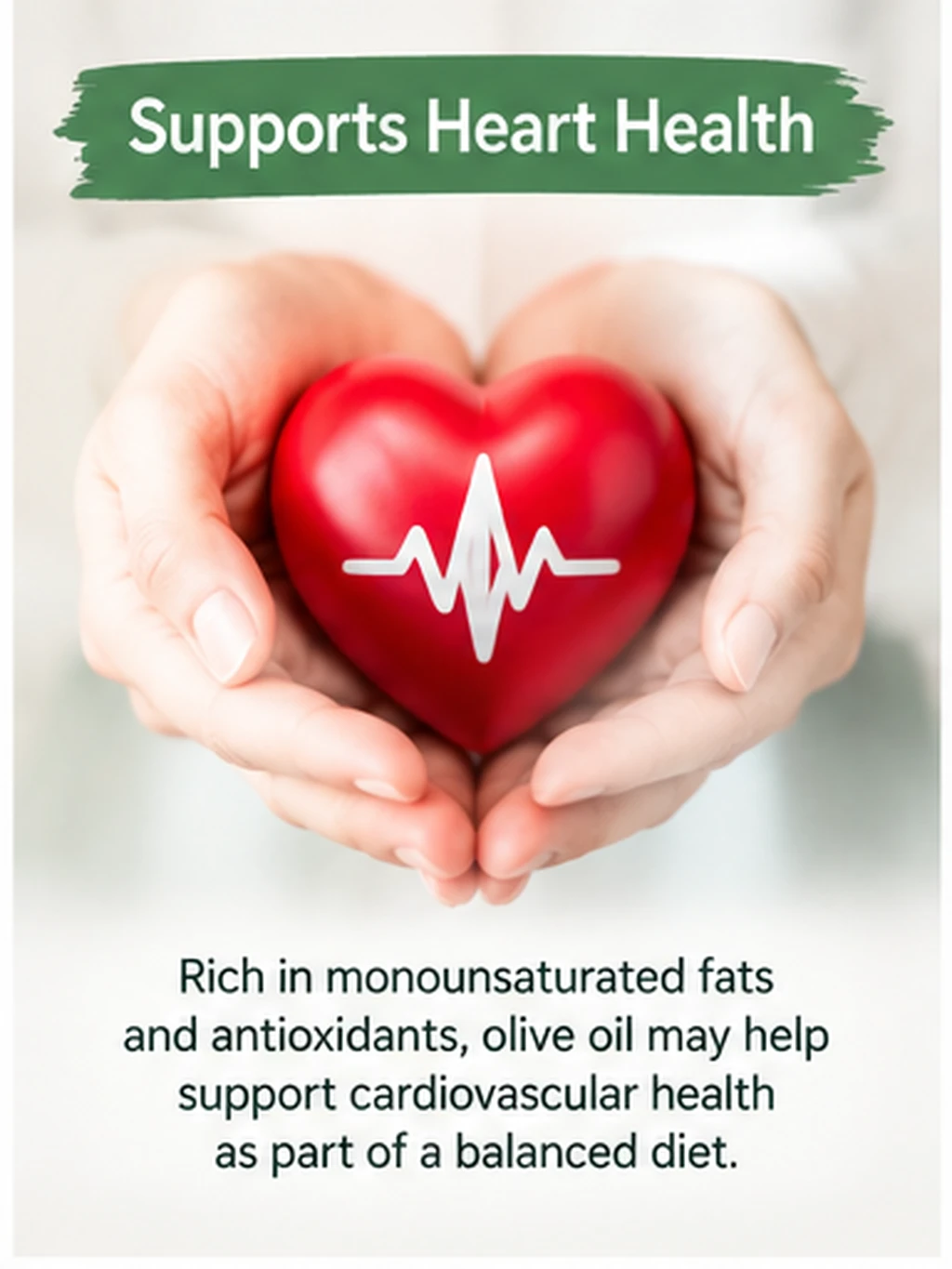
One of the most frequently discussed benefits of olive oil is its relationship with cardiovascular health. Replacing some foods high in saturated fat with sources of unsaturated fat can be part of a heart-healthy eating pattern.
Olive oil fits particularly well into this approach because it provides predominantly monounsaturated fat. Research on Mediterranean-style dietary patterns has also associated olive-oil-rich eating patterns with cardiovascular benefits.
However, olive oil should not be viewed as a medicine or as a way to "clean" blood vessels. A more accurate way to think about it is this:
Your overall diet, physical activity, smoking status, body weight, blood pressure, cholesterol levels, and other lifestyle factors also matter.
Olive Oil Contains Antioxidant Compounds
Extra virgin olive oil is particularly interesting because it contains more than just fat. It also provides naturally occurring antioxidant compounds, including polyphenols and vitamin E.
Antioxidants help protect cells from oxidative processes. Oxidative stress is a normal biological process, but excessive oxidative stress can contribute to cellular damage. This is one reason extra virgin olive oil has attracted so much attention in research on healthy aging.
However, it would be inaccurate to describe olive oil as a product that "stops aging." A better description is that the antioxidant compounds found in extra virgin olive oil may contribute to a dietary pattern associated with healthy aging.
Should You Drink Olive Oil on an Empty Stomach?
This is one of the biggest questions surrounding olive oil today. You may have seen people drinking one tablespoon of extra virgin olive oil every morning, sometimes mixed with lemon juice. But is this necessary?
No.
There is no special requirement to drink olive oil on an empty stomach in order to benefit from it. If you enjoy the taste and tolerate it well, consuming a small amount is one option. But for many people, incorporating olive oil into meals is much easier and more practical.
Best Ways to Consume Extra Virgin Olive Oil
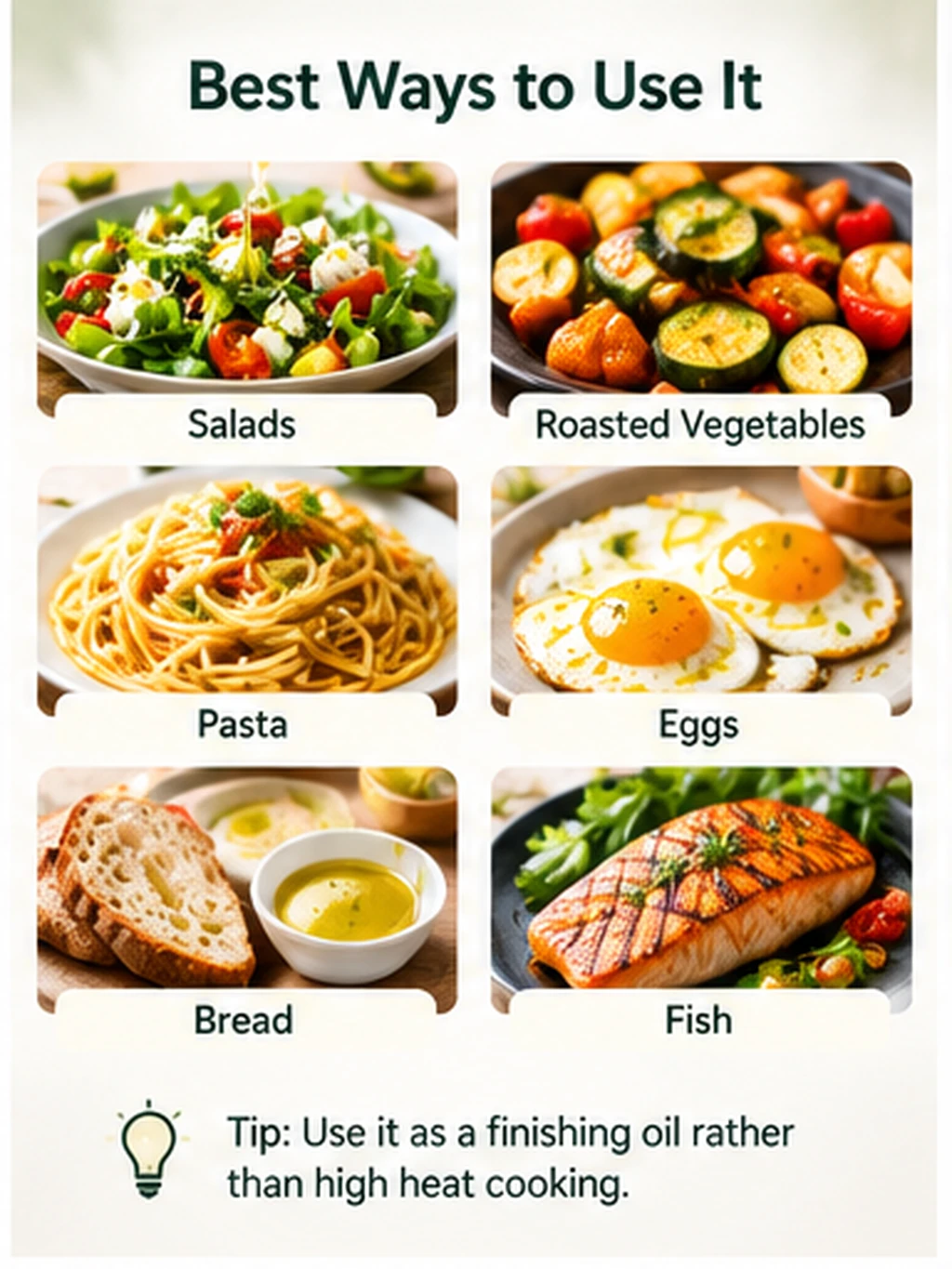
You can add olive oil to many everyday foods:
- Salads: Combine with vinegar, lemon juice, herbs, and spices for a simple dressing
- Roasted vegetables: A small amount adds flavor without excessive fat
- Pasta: Finish with olive oil, herbs, garlic, and vegetables instead of heavy cream
- Eggs: A small drizzle adds flavor to cooked eggs
- Bread: Use as a dip for whole-grain bread
- Fish: Pairs perfectly with grilled or baked fish
The important point is consistency. You don't need an elaborate "olive oil shot" routine if you already enjoy using olive oil in your meals.
Can Olive Oil Cause Stomach Discomfort?
Some people tolerate olive oil very well, while others may experience digestive discomfort when consuming a large amount of oil at once.
Drinking a concentrated amount of oil may cause symptoms such as:
- Nausea
- Stomach discomfort
- Loose stools
- A feeling of fullness
If olive oil does not feel good when consumed by itself, there is no reason to force yourself to drink it. Using a moderate amount with food may be a more comfortable option. If you have a diagnosed gastrointestinal or gallbladder condition, discuss dietary changes with your healthcare professional.
How Many Calories Are in Olive Oil?
Olive oil is nutritious, but it is still a calorie-dense fat. A tablespoon of olive oil contains approximately 120 calories, although the exact amount can vary slightly depending on serving size.
This matters if you are trying to lose weight or carefully manage calorie intake. Adding large amounts of olive oil to an otherwise unchanged diet can increase total calorie intake.
Therefore, the goal should not be: "The more olive oil I consume, the healthier I will be."
Instead, think of olive oil as a nutritious fat that should be used in an appropriate portion within your overall calorie intake.
How Much Olive Oil Should You Consume?
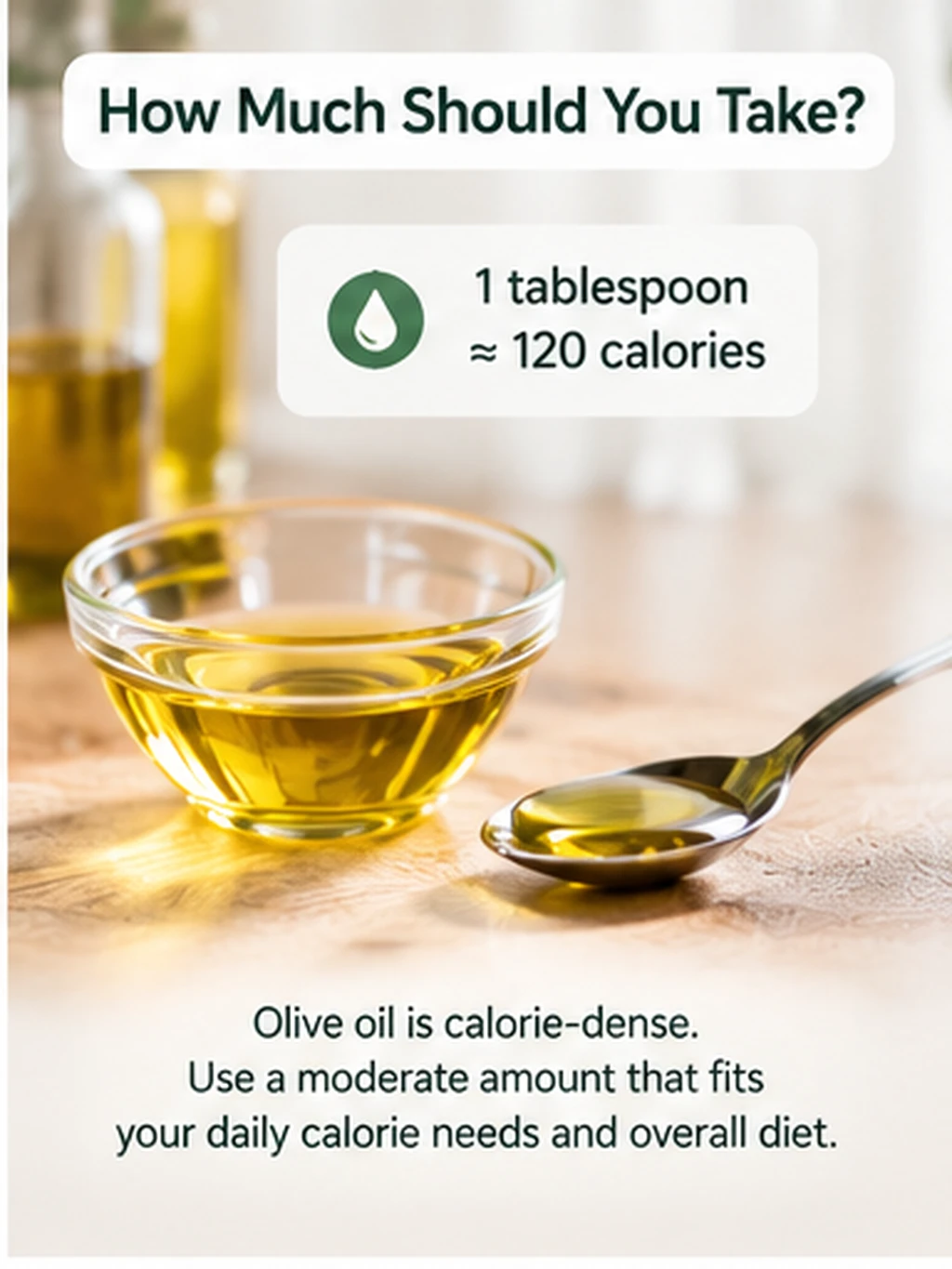
There is no single amount that is perfect for everyone. Your ideal intake depends on:
- Total calorie requirements
- Overall diet
- Activity level
- Weight-management goals
- Other sources of dietary fat
- Individual health conditions
For many people, using olive oil as the primary added fat in meals can be a practical approach. Rather than focusing on drinking a fixed number of spoonfuls every morning, focus on replacing less desirable fat sources with unsaturated fats such as olive oil.
Is Extra Virgin Olive Oil Good for Cooking?
There is a common misconception that extra virgin olive oil should never be heated. The reality is more nuanced.
Extra virgin olive oil can be used in many everyday cooking situations. However, prolonged exposure to very high temperatures can degrade some of its desirable compounds.
If you want to preserve its fresh flavor and delicate antioxidant compounds, one practical strategy is to use it as a finishing oil.
How to use as a finishing oil:
- Cook your vegetables or dish
- Plate the food
- Add a small drizzle of extra virgin olive oil
- Finish with herbs or spices
How to Store Extra Virgin Olive Oil
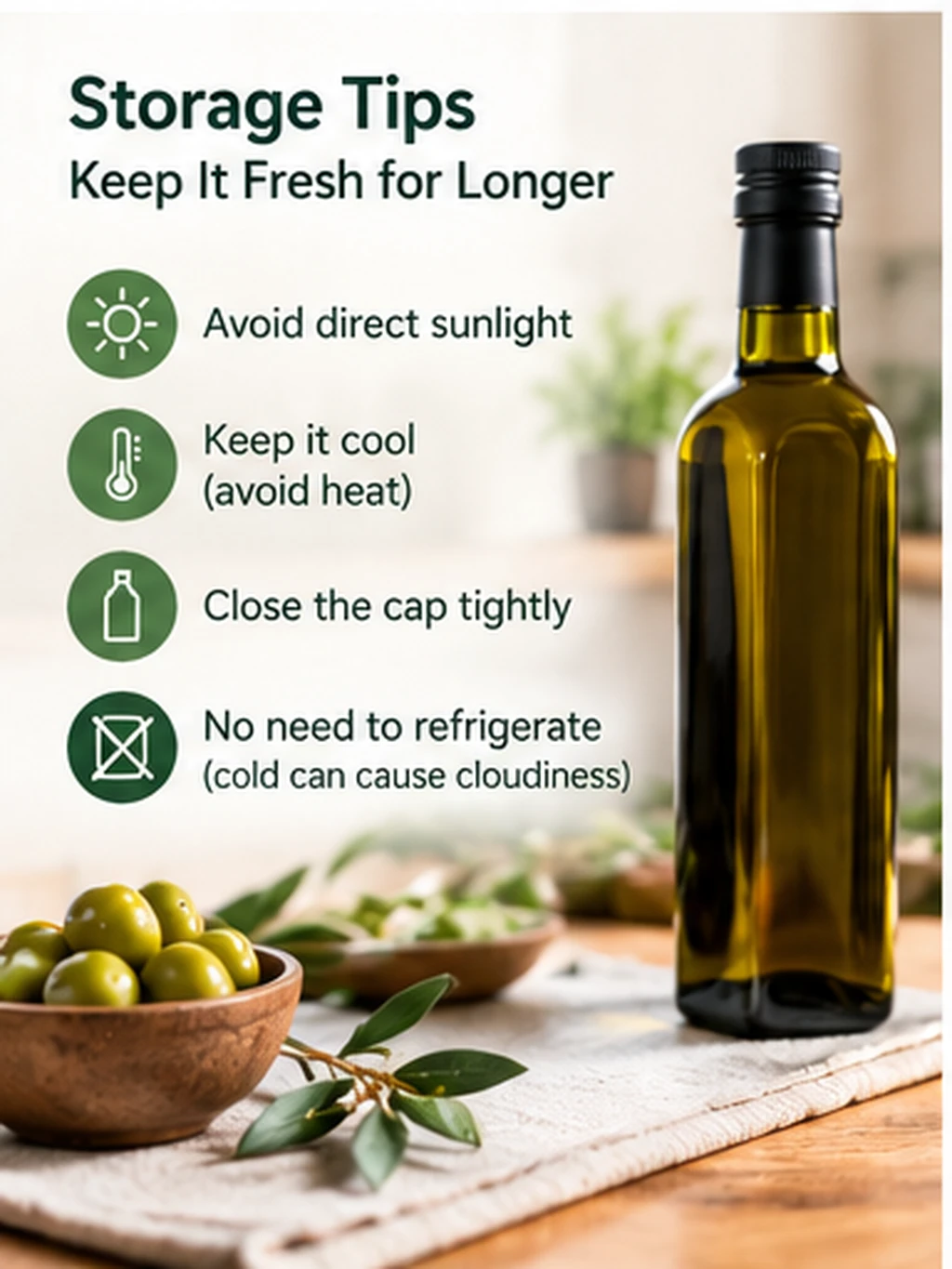
Proper storage is extremely important. Three major enemies of olive oil are:
Storage Tips:
- Keep It Away From Direct Sunlight: Do not leave your olive oil next to a sunny window. A cool, dark cupboard is usually a better location.
- Close the Cap Tightly: Every time you use the bottle, close it properly. Reducing oxygen exposure can help preserve the oil.
- Avoid Excessive Heat: Do not store olive oil next to a stove or another consistently hot location.
- Do You Need to Refrigerate? Usually, refrigeration is unnecessary for everyday storage. Cold temperatures can cause olive oil to become cloudy or solidify temporarily, which does not mean the oil has gone bad.
How Long Does Olive Oil Last After Opening?
Once a bottle is opened, oxygen gradually interacts with the oil. For this reason, it is better not to keep the same bottle open for an unnecessarily long period.
Rather than relying on an exact "three-month rule" for every bottle, pay attention to:
- Harvest date
- Best-before date
- Storage conditions
- Bottle size
- How frequently you use it
If you use olive oil only occasionally, buying a smaller bottle may actually be a better strategy because you can finish it sooner.
How Can You Tell If Olive Oil Has Gone Bad?
Fresh extra virgin olive oil usually has a pleasant aroma and flavor. If the oil develops an unpleasant stale, waxy, or rancid smell or taste, it may have deteriorated.
When an oil clearly smells or tastes rancid, it is better not to continue using it simply because the expiration date has not technically passed. Storage conditions matter. A bottle exposed to heat, light, and oxygen can deteriorate faster than one stored properly.
Olive Oil Capsules: Are They Worth Taking?
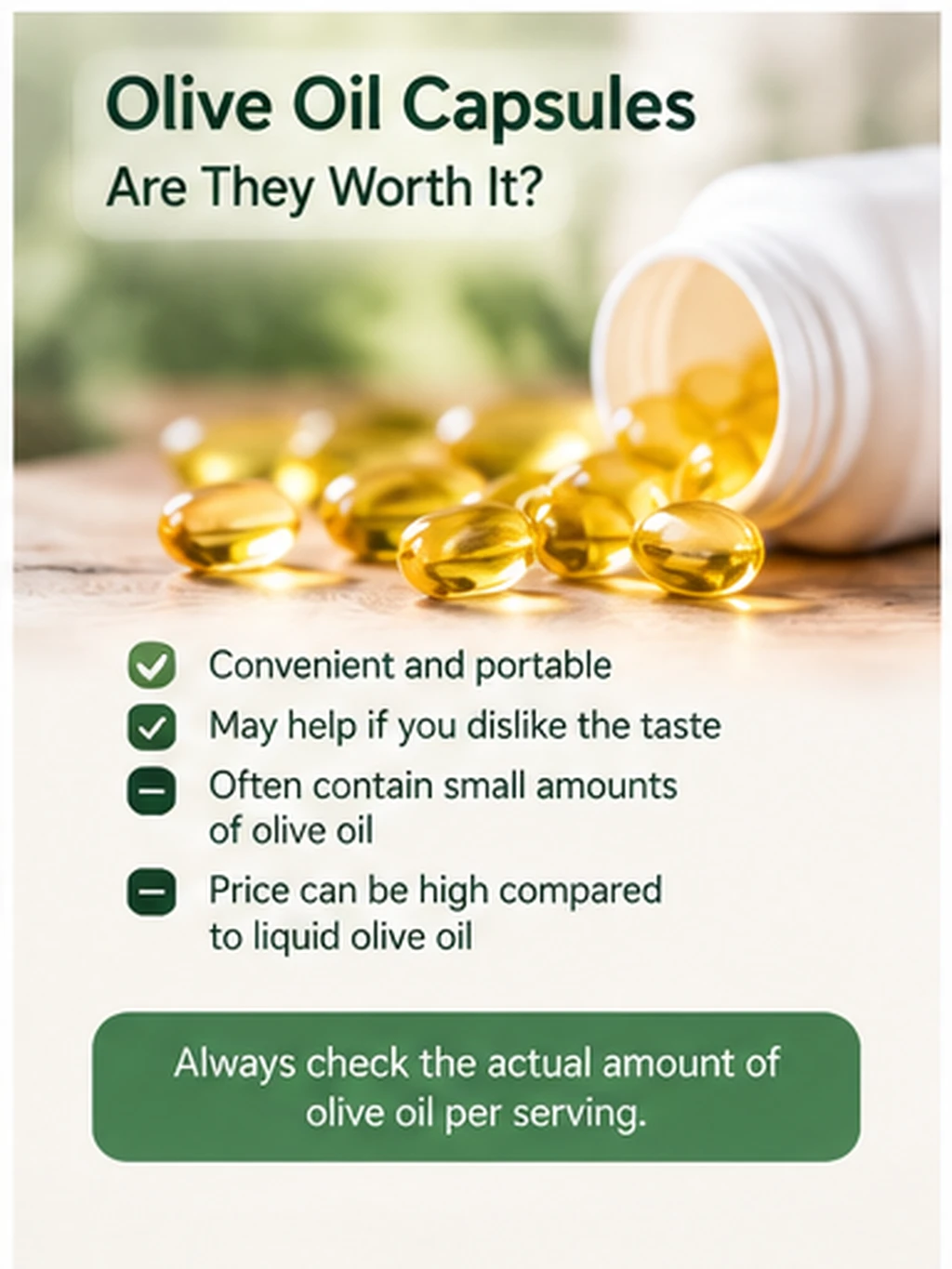
Olive oil capsules have become increasingly popular. They are convenient, portable, and may appeal to people who dislike the taste of liquid olive oil.
But there is an important issue: Many capsules contain relatively small amounts of olive oil compared with the amount you would normally use in cooking.
For example, taking several capsules may provide far less olive oil than simply adding a tablespoon of liquid olive oil to a meal.
When considering capsules, compare:
- Price
- Serving size
- Actual amount of olive oil per serving
Capsules may be convenient for certain people, but they should not automatically be considered better than food-based sources.
How to Choose a Good Extra Virgin Olive Oil
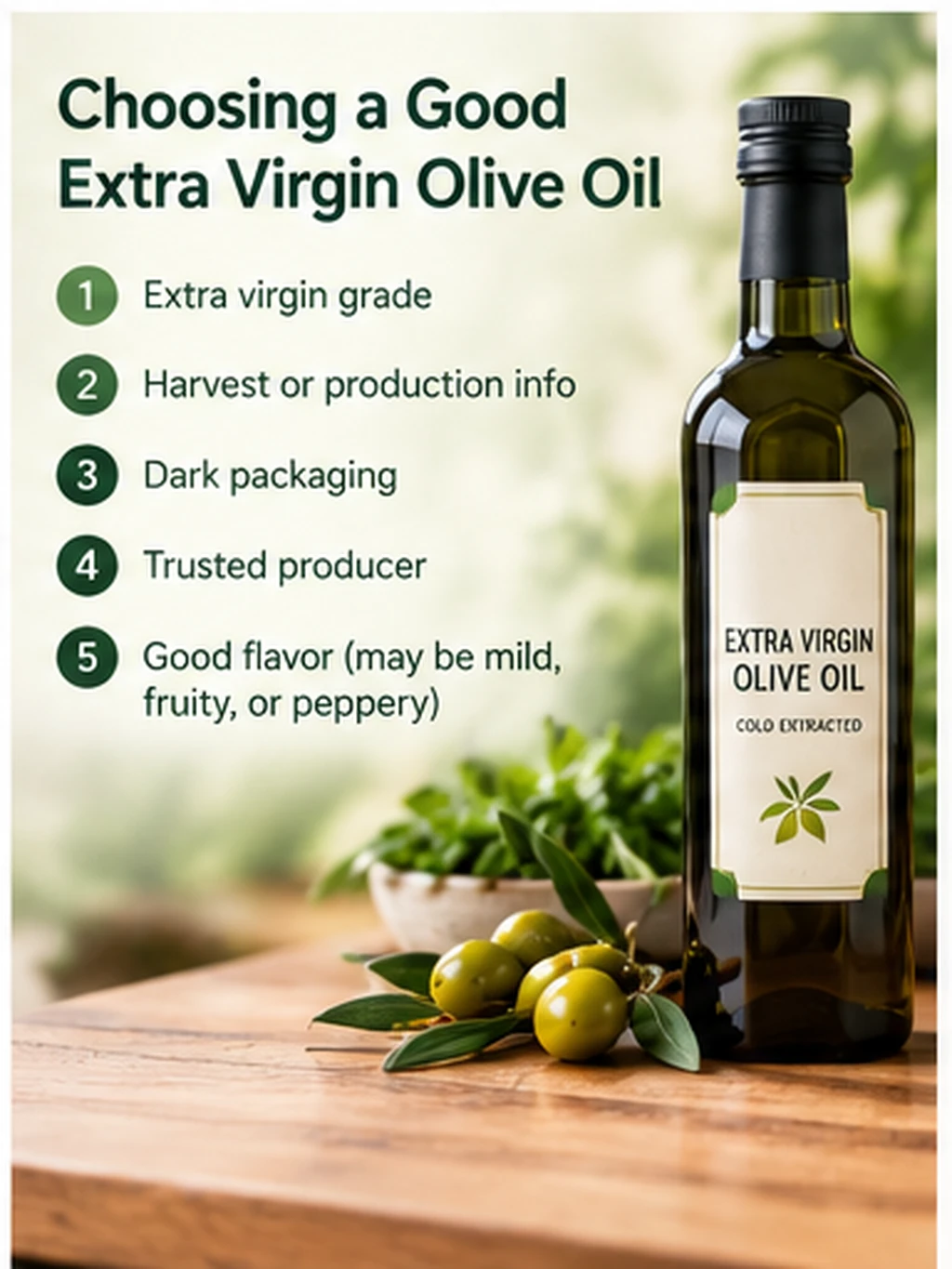
When shopping for olive oil, start by looking for:
1. Extra Virgin Grade
If your goal is to obtain the characteristics associated with high-quality olive oil, look for extra virgin olive oil.
2. Harvest or Production Information
Freshness matters. Look for products that provide clear harvest or production information when available.
3. Dark Packaging
Light, heat, and oxygen can accelerate deterioration. Dark glass bottles or other protective packaging can help reduce exposure to light.
4. A Trusted Producer
Look for transparent labeling and reputable producers.
5. Good Flavor
High-quality extra virgin olive oil can have a range of flavors, from mild and buttery to grassy, peppery, or slightly bitter. A peppery sensation is not necessarily a sign that the oil is bad—it can be associated with naturally occurring phenolic compounds.
Olive Oil and Healthy Aging
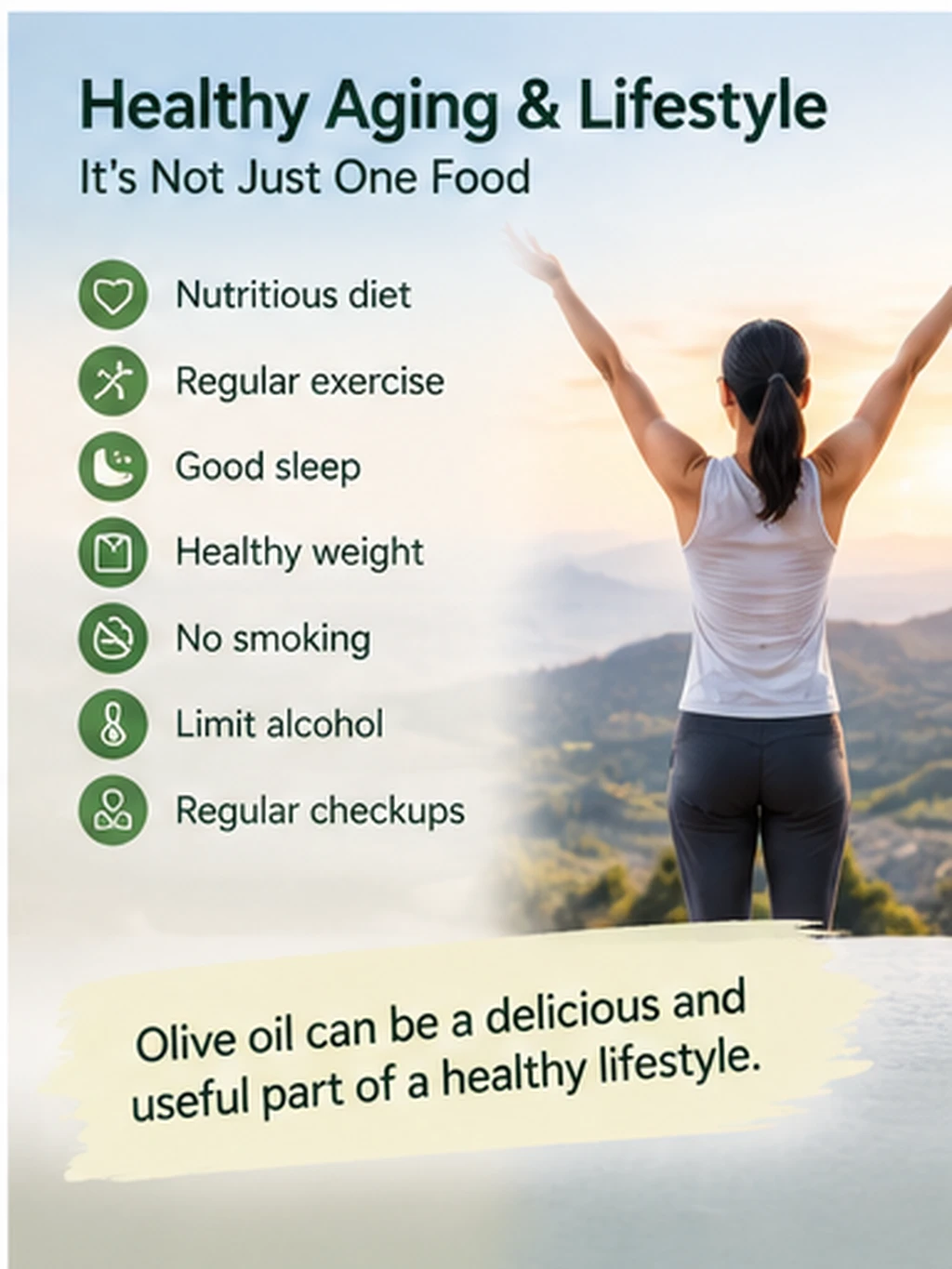
Olive oil is often promoted as an "anti-aging food." That phrase can be misleading. No single food can stop biological aging.
However, extra virgin olive oil can fit into a dietary pattern rich in vegetables, fruits, legumes, whole grains, fish, nuts, and other minimally processed foods. This broader pattern is much more important than any individual ingredient.
If you are interested in healthy aging, think beyond supplements and individual foods. Focus on:
- A nutrient-dense diet
- Regular physical activity
- Adequate sleep
- Maintaining a healthy weight
- Not smoking
- Limiting excessive alcohol
- Managing blood pressure and cholesterol
- Regular medical checkups when appropriate
Olive oil can be one useful part of that bigger picture.
Frequently Asked Questions
Is drinking olive oil every morning healthy?
Drinking olive oil is not necessary to obtain its nutritional benefits. Incorporating extra virgin olive oil into meals can be a practical alternative.
Can I drink olive oil on an empty stomach?
Some people do, but it is not required. If drinking oil causes nausea, reflux, or digestive discomfort, consuming it with food may be more comfortable.
Is one tablespoon of olive oil a day too much?
A tablespoon provides around 120 calories. Whether that amount fits your diet depends on your total calorie and fat intake.
Is extra virgin olive oil better than regular olive oil?
Extra virgin olive oil undergoes less processing and can retain more naturally occurring compounds from olives. It is generally the type to look for when you specifically want extra virgin olive oil.
Should olive oil be refrigerated?
Usually not necessary. A cool, dark place away from heat and sunlight is generally more convenient for everyday storage.
Are olive oil capsules better than liquid olive oil?
Not necessarily. Capsules offer convenience, but the amount of olive oil per serving can be relatively small. Compare the serving size and cost before purchasing.
Can olive oil help with healthy aging?
Olive oil contains monounsaturated fat and antioxidant compounds and can be part of a healthy dietary pattern. However, no single food can prevent or reverse aging.
The Bottom Line
Extra virgin olive oil is much more than a simple cooking ingredient. It provides predominantly monounsaturated fat and naturally occurring compounds such as polyphenols and vitamin E.
But you do not need to turn olive oil into a daily "health shot." For most people, a simpler strategy is to use a reasonable amount of high-quality extra virgin olive oil as part of balanced meals.
Protect olive oil from light, heat, and oxygen. Store it in a cool, dark place, close the bottle tightly after every use, and buy an amount that you can reasonably finish while the oil is still fresh.
Ultimately, healthy aging does not come from one miracle food or supplement. It comes from a consistent lifestyle built around a nutritious diet, regular movement, good sleep, and sensible health habits. Extra virgin olive oil can be a delicious and useful part of that bigger picture.