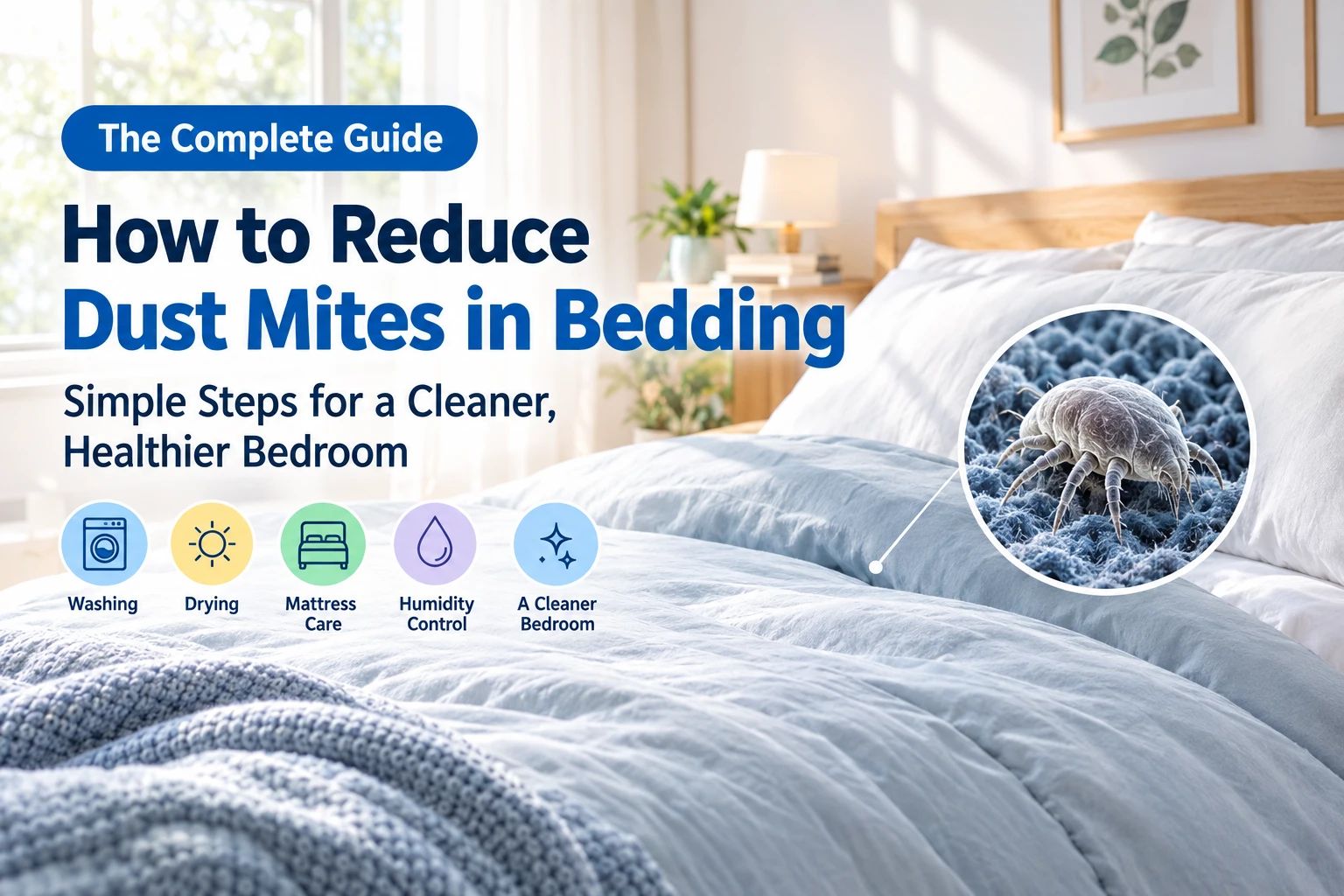
If you wake up with sneezing, a stuffy nose, itchy eyes, or unexplained irritation, your bedroom may deserve more attention than you think.
Your bed is one of the places where you spend the most time every day. Sheets, pillowcases, blankets, mattresses, and comforters can gradually collect dust, sweat, skin flakes, and other particles. For people who are sensitive to dust mites, maintaining clean and dry bedding can be an important part of creating a more comfortable sleeping environment.
Dust mites are microscopic organisms commonly associated with household dust. They thrive in environments where there is sufficient moisture and organic material. Your bed provides several conditions that can make it an attractive environment for these tiny creatures.
The goal is not to create a completely sterile bedroom, but to reduce unnecessary accumulation of dust and allergens while keeping your bedding clean and dry.
What Are Dust Mites and Why Are They Found in Bedding?
Dust mites are microscopic organisms that are almost invisible to the naked eye. They are commonly found in household dust and thrive in warm, humid environments with organic material like skin flakes and sweat.
Your bed provides ideal conditions for dust mites:
- Human skin flakes
- Sweat and moisture
- Warm temperatures
- Fabric surfaces
- Limited ventilation
The dust mites themselves are not harmful to everyone, but their waste products and body parts can trigger allergic reactions in sensitive individuals. If you experience allergy symptoms, consult a healthcare professional for proper diagnosis and treatment options.
1. Wash Bedding Regularly
Sheets and pillowcases come into direct contact with your skin every night. Over time, they accumulate sweat, oil, skin cells, dust, and more.
A Simple Routine
- Sheets: Wash regularly
- Pillowcases: Change weekly
- Blankets & comforters: Follow care instructions
- Mattress protectors: Wash regularly
Most important factor: Consistency
Regular washing removes accumulated dust, oils, and allergens. The frequency depends on your personal habits, but washing at least every 1-2 weeks is generally recommended for sheets and pillowcases.
2. Can Washing at 60°C Help With Dust Mites?
Hot water washing can be useful for reducing dust mites, but not every fabric can tolerate high temperatures.
Before Washing, Check
- Maximum washing temperature
- Whether it can be machine washed
- Tumble drying allowed
- Special detergent required
- Professional cleaning needed
Always check the care label before selecting a high-temperature cycle. Follow the manufacturer's instructions to avoid damaging your bedding.
3. Don't Overload Your Washing Machine
Large bedding can occupy most of the drum. If it's packed too tightly, water and detergent may not circulate effectively.
For Bulky Bedding
- Check machine capacity
- Follow manufacturer instructions
- Avoid overloading items
- Allow space for movement
- Consider professional laundry for very large items
4. Dry Bedding Completely
Never store bedding while it is damp. Thick blankets can remain wet inside even when the surface feels dry. Moisture creates an ideal environment for dust mites and mold growth.
After Washing
- Use a dryer when permitted
- Air-dry thoroughly
- Use sunlight when appropriate
- Turn thick bedding
- Ensure interior is completely dry
5. Wash Pillowcases Regularly
Your pillowcase has direct contact with your face and hair for hours every night. Wash it at least weekly or more often if you sweat heavily, have oily skin, or use hair skincare products.
Increase Frequency If You
- Sweat heavily during sleep
- Have oily skin
- Use hair or skincare products
- Have pets on the bed
- Experience allergy symptoms
6. Don't Forget the Mattress
The mattress is difficult to wash, so prevention is key. Regular vacuuming, ventilation, and mattress protection can help maintain cleanliness.
Mattress Maintenance
- Vacuum regularly
- Ventilate the surface
- Use a washable mattress protector
- Keep it dry
- Follow manufacturer instructions
7. Control Bedroom Humidity
Dust mites thrive in humid environments. Keeping a comfortable humidity level is one of the most effective ways to reduce their population.
Helpful Habits
- Ventilate regularly
- Use a dehumidifier when needed
- Avoid drying laundry inside the bedroom
- Monitor humidity with a hygrometer
- Keep windows open when weather permits
8. Seasonal Blanket Cleaning & Storage
Don't store blankets directly on the bed before use. Clean and properly dry them before storage to prevent dust and moisture accumulation.
Before Storage
- Wash and dry completely
- Fold carefully
- Use clean, breathable containers
- Store in a dry place
- Check periodically
Why Clean Bedding Matters
Clean bedding is fundamental to a healthy sleeping environment. When you reduce dust accumulation, you're not just addressing a cosmetic concern—you're creating conditions that support better sleep quality and respiratory comfort, especially for people with allergies or sensitivities.
The Complete Bedroom Cleaning Checklist
✓ Wash sheets and pillowcases regularly
✓ Check care labels before washing
✓ Avoid overloading the washing machine
✓ Dry bedding completely
✓ Vacuum and ventilate your mattress
✓ Monitor bedroom humidity levels
✓ Store off-season bedding properly
✓ Maintain consistency in your routine
Final Thoughts
Reducing dust mites in your bedding doesn't require complicated procedures. A combination of regular washing, thorough drying, humidity control, and mattress care creates an environment that is less hospitable to these microscopic organisms.
A cleaner bedroom means a healthier and more comfortable sleeping space. Start with one or two habits from this guide and gradually build a routine that works for your lifestyle.
If you experience persistent allergy symptoms despite these efforts, consult a healthcare professional to explore additional options.