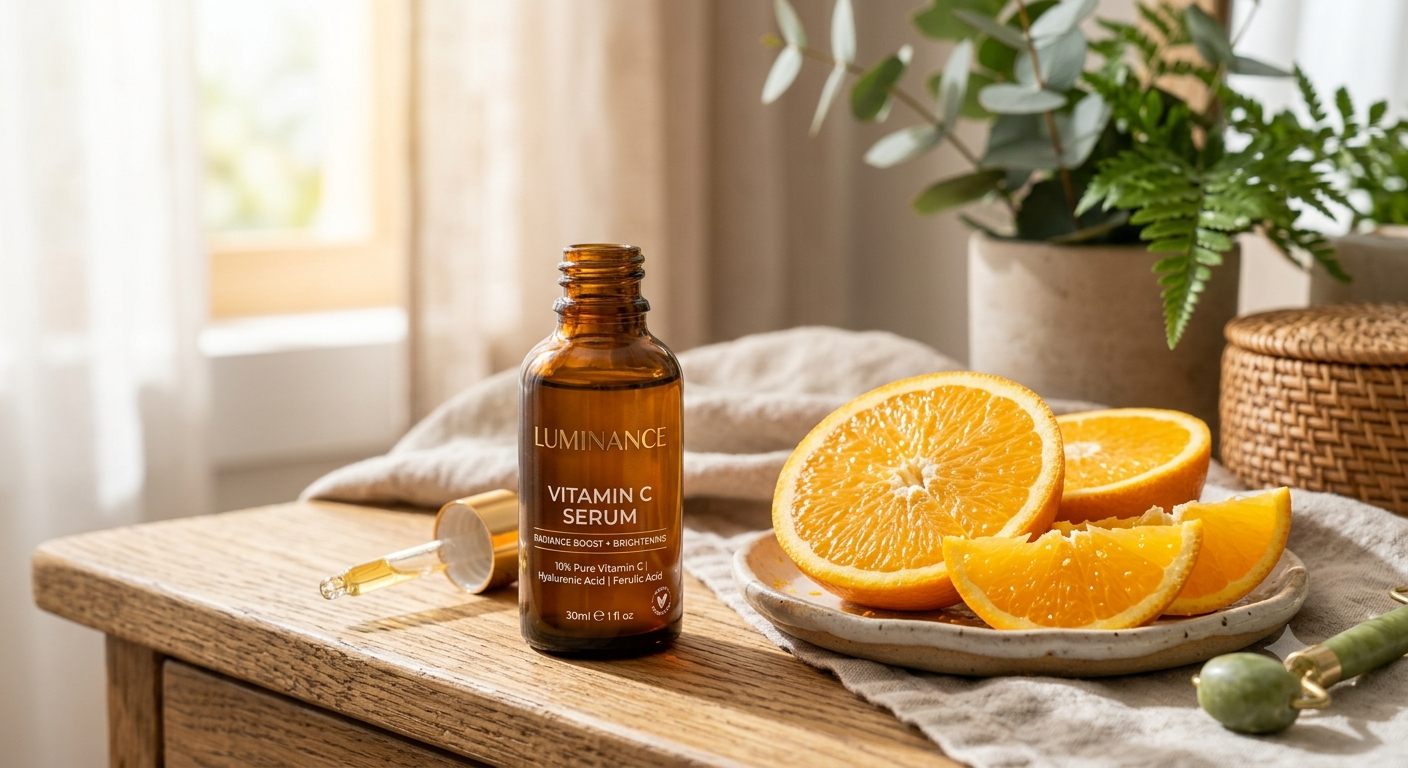
Vitamin C is widely recognized by skin experts as an absolute powerhouse ingredient. It brightens complexions, fights aging with potent antioxidants, diminishes fine lines, soothes inflammation, and actively stimulates collagen production. However, because it is an incredibly unstable molecule, applying it incorrectly can completely waste its potential, or even irritate your skin.
If you want to get the most out of every drop, you need to master the exact, science-backed application rules. Here they are, from formulation to finger technique.
The 3 Golden Rules of Pure Vitamin C Formulation
Before focusing on how to apply it, make sure you're using the right product in the first place. The golden-standard formula for pure vitamin C absorption relies on three strict criteria established by dermatological science:
| Criterion | What to Look For | Why It Matters |
|---|---|---|
| Form | Pure vitamin C, listed as Ascorbic Acid on the ingredient deck | The most researched, most effective form |
| pH level | Highly acidic, pH ≤ 3.5 | Required to penetrate the skin barrier |
| Concentration | 10 to 20% | Above 20%, absorption plateaus but irritation risk climbs sharply |

In short: Ascorbic Acid, pH ≤ 3.5, 10 to 20% concentration. If your serum checks those three boxes, the rest comes down to how you use it.
5 Essential Rules to Maximize Your Vitamin C Benefits
1. Always Apply It in Your Morning Routine
A common myth claims that vitamin C darkens your face when exposed to daylight. This stems from confusing oxidation with phototoxicity. While vitamin C does turn brown when exposed to light and air (losing its efficacy), it is not toxic to your skin.
In fact, vitamin C delivers its highest value during the day. UV rays generate harmful free radicals that break down collagen and accelerate aging. Sunscreen blocks UV at the surface, and vitamin C works as an inner line of defense, neutralizing the free radicals that get past it. The two protect your skin far better together, which is why the serum step belongs in your morning routine, right before SPF.
2. Less Is More: Do Not Over-Apply
Your skin has a saturation limit. Once the cellular pathways are full, the remaining acidic serum sits on the skin surface, oxidizes, interrupts your moisturizer's absorption, and causes redness or stinging. Start with just one or two drops to test your skin's tolerance, and gradually increase the amount only if your skin feels comfortable.
3. Wait at Least 5 Minutes Before Applying Moisturizer
This is where most people make a critical mistake. Pure vitamin C operates at a highly acidic pH ≤ 3.5, whereas standard daily moisturizers have a balanced, skin-friendly pH of 5.5 to 6.5. If you slap on your moisturizer immediately after your vitamin C serum, the products mix on your skin and raise the pH instantly. This neutralizes the vitamin C, rendering it about as effective as plain water.
Give the serum at least 5 minutes to fully absorb before layering your next product. Brush your teeth, make your bed, then come back for moisturizer.
4. Separate Your Vitamin C and Retinol: Day vs. Night
Marketing trends often push layering vitamin C and retinol together for an aggressive anti-aging punch. Skin experts advise strongly against this within the same routine. Retinol temporarily thins the stratum corneum and increases sensitivity, pouring a low-pH, highly acidic vitamin C serum directly on top is like squeezing fresh lemon juice on an open scratch. On top of that, their active pH environments clash, neutralizing each other's benefits.
The optimal split: vitamin C in the morning to fight UV damage, retinol at night to repair wrinkles and boost cell turnover.
5. Boost Absorption with the Right Application Technique

Instead of aggressively rubbing or tapping, gently press your palms flat against your face. The natural body heat from your hands temporarily raises skin temperature, accelerating the molecular diffusion rate so the active ingredients settle deeper into your skin.
If you own a galvanic facial device, set the current to negative (−) polarity: it repels the water-soluble, negatively charged vitamin C molecules, physically driving them past the skin barrier for maximum absorption.
💡 Quick Tip: Should You Drink or Apply Vitamin C?
Both, but they do different jobs. Consuming vitamin C is fantastic for overall health, but your body's survival mechanics prioritize vital organs (heart, liver, brain) first, and the skin is last in line to receive ingested nutrients. A topical serum is a targeted, high-concentration strike delivered exactly where you want the glow. If you're curious about the supplement side, see our guide to the best time to take vitamins.
Final Thoughts
Vitamin C rewards precision. Pick a pure, properly formulated serum (Ascorbic Acid, pH ≤ 3.5, 10 to 20%), wear it in the morning under sunscreen, keep the amount modest, give it five quiet minutes before moisturizer, save retinol for nighttime, and press, don't rub, it in. Do that consistently for a few weeks, and your skin will show you the difference.
"Good skincare is less about doing more and more about doing the right things in the right order."
This article is for general information and education only and is not medical advice. Skin types and sensitivities vary. Patch-test new products, and consult a board-certified dermatologist if you have a skin condition or experience persistent irritation.

Emma is a certified wellness coach and the founder of The Daily Glow. She writes weekly about intentional living and the everyday habits that actually stick. Read her story →


